Botox vs. Fillers in San Jose: How to Choose the Right Injectable
By Dr. Anjali Dhar
Medically reviewed byDr. Anjali Dhar, MD, Founder and Medical Director of Luminance Regenerative Beauty & Wellness
Botox® Cosmetic and dermal fillers solve two different problems. Botox relaxes the muscles that crease your skin when you frown, squint, or raise your brows, while fillers restore volume and shape that have softened over time. For most patients, the right choice comes down to one simple question: does the line you notice appear when you move, or is it there when your face is at rest?
That question is only the beginning. Timing, upkeep, budget, and how you feel about synthetic versus natural ingredients all shape the decision. This guide from Luminance Regenerative Beauty & Wellness compares Botox, Daxxify®, hyaluronic acid fillers, collagen stimulators, EZ Gel PRF, and Kybella®, so you can arrive at your San Jose consultation already knowing what matters most to you.
Key Takeaways
Movement lines point to Botox: Creases that appear with expression, such as frown lines and crow’s feet, respond best to a wrinkle relaxer.
Resting lines and hollows point to filler: Lines, folds, and hollows that are visible when your face is still usually reflect volume loss.
Longevity varies widely: Results range from about three months with Botox to roughly two years with some collagen stimulators.
Many patients combine treatments: A thoughtful plan often pairs a wrinkle relaxer with filler for a balanced, natural-looking result.
Botox or Filler? Start With the Mirror Test
The simplest way to sort your concerns takes about 30 seconds. Sit in front of a mirror in natural light, relax your face completely, and note what you see. Then frown, raise your eyebrows, and smile broadly, and watch which lines appear or deepen.
Lines that appear only with expression: These are dynamic wrinkles, created by muscle movement. A neuromodulator such as Botox is usually the first option your injector will consider.
Lines that remain at rest: Years of repeated movement can etch a line into the skin. These often benefit from Botox to stop the folding, plus a small amount of filler to soften what remains.
Hollows, flatness, or softened contours: Thinning cheeks, under-eye hollows, and deepening folds around the mouth reflect volume loss, which filler or a collagen stimulator addresses.
Fullness you’d like to reduce: Fullness beneath the chin is a different concern altogether, and it is better suited to Kybella than to any line-smoothing treatment.
The mirror test won’t replace a professional assessment, but it gives you a clear, confident starting point for your conversation with our team.
San Jose Injectables Compared at a Glance
Each injectable works differently, which is why results, timing, and maintenance vary so much. The table below summarizes typical timelines; your own results depend on your anatomy, the area treated, and how quickly your body metabolizes the product.
The same expression lines, with fewer visits per year
Often within 2 days
Median of about 6 months (frown lines)
No; wears off gradually
HA fillers (Juvéderm®, Restylane®)
Lips, cheeks, under-eyes, folds, and contour
Immediately; settles within 1 to 2 weeks
6 to 18 months, by product and area
Yes, with hyaluronidase
Sculptra®
Gradual volume and collagen in the cheeks and temples
Builds over several months
Often around 2 years
No
Radiesse®
Structural support for the jawline and deeper folds
Immediately, then gradually
About 1 year or longer
No
EZ Gel PRF
Natural volume made from your own blood
Soft fullness right away; collagen over weeks
Varies; often maintained once or twice a year
No; absorbs naturally
Kybella®
Fullness beneath the chin
Gradually, over 2 to 6 sessions
Long-lasting; treated fat cells no longer store fat
No
Why Botox Is Where Most Patients Begin
Neuromodulators remain the most requested minimally invasive cosmetic treatment in the country. According to the American Society of Plastic Surgeons’ 2024 procedural statistics, providers performed 9,883,711 neuromodulator treatments in 2024, nearly twice the 5,331,426 hyaluronic acid filler treatments performed that year.
Part of the appeal is that Botox is an easy first step. Results are temporary, there is no meaningful downtime, and Botox Cosmetic now holds four FDA-approved aesthetic indications: frown lines, crow’s feet, forehead lines, and the vertical neck bands along the jaw known as platysma bands. Luminance has treated more than 2,000 patients with Botox in San Jose.
Botox, Daxxify, or Dysport: Choosing Your Wrinkle Relaxer
If the mirror test points you toward a wrinkle relaxer, the next decision is which one. Each relaxes the targeted muscles in a similar way, so the choice usually comes down to track record, longevity, and how often you’d like to come in.
Botox® Cosmetic for the longest track record: Botox has been used cosmetically for more than two decades and carries the broadest set of FDA approvals for aesthetic use. Results typically last three to four months.
Daxxify® for fewer appointments: In clinical trials for frown lines, Daxxify showed a median duration of about six months, and some patients still saw results at nine months. If you’d rather visit twice a year than three or four times, that difference matters.
Dysport® if it’s what you’ve had before: Dysport is another widely used neuromodulator. Its units are measured differently from Botox units, so comparing “units” or price per unit across brands isn’t a fair comparison.
Timing matters as well. Because Botox reaches its full effect in about two weeks, schedule your appointment at least two weeks before a wedding, reunion, or photo session so you can enjoy the finished result.
Sculptra vs. Filler: Instant Volume or Gradual Collagen?
Once the concern is volume rather than movement, the choice is between hyaluronic acid (HA) fillers and collagen stimulators. Both can restore a fuller, refreshed contour, but they arrive there in very different ways.
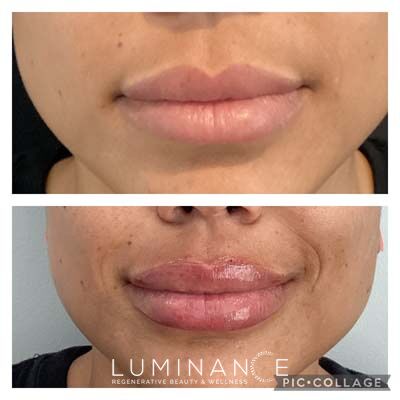
Hyaluronic acid fillers for immediate, adjustable results: Products such as Juvéderm® and Restylane® add volume the moment they’re placed, and they can be dissolved with an enzyme called hyaluronidase if you ever want to adjust. That reversibility is reassuring for first-time patients and for delicate areas like the lips.
Sculptra® for gradual, natural-looking change: Sculptra (poly-L-lactic acid) prompts your skin to rebuild its own collagen over a series of sessions. Results develop over several months and often last around two years, but they can’t be dissolved.
Radiesse® for structure and support: Radiesse (calcium hydroxylapatite) provides some immediate lift along with collagen stimulation, which suits areas that need structural support, such as the jawline. Like Sculptra, it isn’t reversible with hyaluronidase.
If you prefer a treatment made entirely from your own body, EZ Gel PRF offers a third path: a gel prepared from your blood that adds soft volume while supporting collagen. It’s a natural fit for patients drawn to Luminance’s regenerative approach. You can learn more about individual products on our dermal fillers and lip fillers pages.
Kybella vs. Chin Filler: Refining Your Profile
A softer jawline can come from two opposite causes, and the right injectable depends on which one you have. Fullness beneath the chin calls for reducing tissue, while a small or receding chin calls for adding projection.
[Kybella®](https://www.myluminance.com/kybella/) for fullness under the chin: Kybella breaks down fat cells beneath the chin, and treated cells can no longer store fat. Most patients need two to six sessions spaced at least a month apart.
Chin filler for projection: Filler placed at the chin adds length and forward projection in a single visit, which can make the jawline look more defined from the side.
Both, when the profile needs balance: Some patients benefit from reducing fullness below the chin and adding gentle projection at its point. If loose skin is the main concern, skin tightening may serve you better than either injectable.
Six Factors San Jose Patients Weigh Before Choosing an Injectable
Beyond the type of concern, these practical considerations often decide which path feels right.
Your calendar: Botox reaches its full effect in about two weeks, and filler can bring a few days of swelling or bruising. With an event ahead, book two to four weeks in advance.
Your maintenance rhythm: Expect to return about every three to four months for Botox, about twice a year for Daxxify, and every 6 to 18 months for most HA fillers, depending on the product and area.
Your yearly budget: A single visit tells only part of the story. Comparing the annual cost of each option, including how often you’ll return, gives you a truer picture than per-visit pricing.
Your comfort with change: If you’re new to injectables, starting with something temporary or reversible, such as Botox or an HA filler, lets you see how you feel before choosing longer-lasting options.
Your ingredient preferences: Some patients prefer regenerative options made from their own blood, like EZ Gel PRF, while others value the predictability of extensively studied products.
Your tolerance for downtime: Most patients return to work the same day, though bruising is possible with any injection. Your provider will tell you which supplements and medications to pause beforehand.
Botox and Filler Together: A Common Bay Area Pairing
You don’t always have to choose. Botox and filler work on different layers, so many patients use both: Botox quiets the muscle that keeps folding the skin, while filler restores the volume beneath it. Together, they often produce a more balanced result than either treatment alone.
Many patients receive both in a single visit, while others benefit from staging them a couple of weeks apart so the Botox result can be assessed first. Your provider will recommend the sequence that suits your goals, whether you’re visiting from downtown San Jose, Campbell, Santa Clara, or elsewhere in Silicon Valley.
How Dr. Anjali Dhar Guides Your Injectable Plan
At Luminance, injectable planning is physician-led. Dr. Anjali Dhar, MD, founded the practice and serves as its medical director. She studied ophthalmology at the University of Pierre & Marie Curie in Paris and completed a dermatology fellowship at the University of California, San Francisco, giving her a detailed understanding of facial anatomy, particularly the delicate area around the eyes.
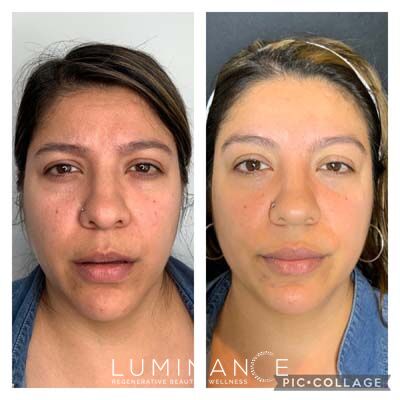
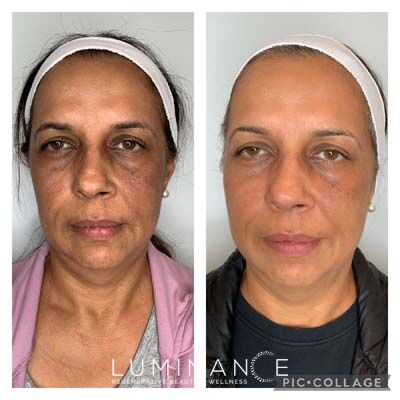
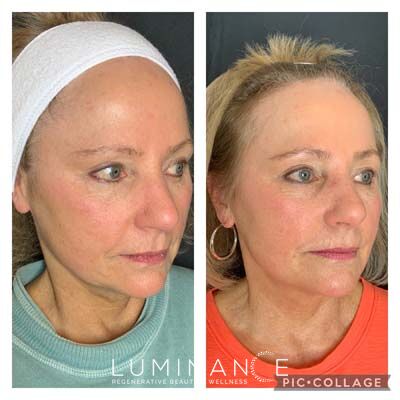
Dr. Dhar’s approach blends conventional injectables with regenerative medicine, so your plan might include Botox, filler, EZ Gel PRF, or a combination, chosen around your anatomy rather than a single product. The aim is always a rested, natural look that still feels like you. You can see examples in our before-and-after gallery; results vary from patient to patient.
What Injectables Cost in San Jose
Injectable pricing in San Jose depends on the product, the number of units or syringes, and the areas treated. At Luminance, Botox and wrinkle relaxer treatments average around $700 per session, and lip filler typically ranges from $500 to $800 per syringe.
Because maintenance schedules differ, it helps to compare costs across a full year rather than a single appointment. Our VIP memberships and payment plans make ongoing care easier to plan, and your provider will walk you through transparent pricing during your consultation.
Botox vs. Filler FAQs
It depends on the type of wrinkle. Botox is usually better for lines that form with expression, such as frown lines, forehead lines, and crow’s feet. Filler is better for lines and folds that remain at rest because of volume loss. Many patients see their best results with a combination of both.
Yes, many patients receive Botox and filler in one appointment, since the two treatments work on different layers of the face. In some cases, your provider may suggest staging them about two weeks apart to evaluate your Botox result before adding volume.
A lip flip uses a small amount of a neuromodulator such as Botox, not filler. It relaxes the muscle around the mouth so the upper lip rolls slightly outward, which is an off-label use. Lip filler, by contrast, adds true volume and shape to one or both lips.
There is no exact conversion. Each brand measures potency with its own method, and the FDA label for Botox Cosmetic notes that its units can’t be converted to those of other products. Dysport is typically dosed with more units, so compare the total treatment cost rather than price per unit.
Not at all. Many patients begin Botox in their 40s, 50s, or later, and neuromodulators were the favored minimally invasive treatment for patients ages 40 to 69 in recent ASPS data. Established lines may benefit from pairing Botox with filler or skin-renewing treatments for the smoothest result.
Our team recommends postponing Botox and fillers during pregnancy and while breastfeeding. These treatments haven’t been adequately studied in these groups, so waiting is the most cautious choice. Gentle facials and medical-grade skincare can help you maintain your routine in the meantime.
Collagen stimulators such as Sculptra typically last the longest, often around two years, because they prompt your skin to build its own collagen. Among wrinkle relaxers, Daxxify generally lasts longer than Botox, with a median of about six months in clinical trials compared with three to four months.
Most side effects are mild and temporary, including redness, swelling, tenderness, and bruising at the injection sites. Wrinkle relaxers can occasionally cause a headache or a temporary drooping brow or eyelid. Fillers carry a rare but serious risk of a blocked blood vessel, which is why an experienced medical provider matters.
Schedule Your Consultation
Choosing an injectable is rarely about the product alone. It is a considered conversation about your face, your schedule, and how you want to feel. We would be glad to begin that conversation with you at our Hedding Street office in San Jose. Call (669) 214-2967 or request your private consultation.